
THE RESOURCE LIBRARY · 5 MINUTES · A BOOK YOU ALREADY HAVE
Got five minutes? Open a picture mystery.
From C. J. McGuire Books · K–2, with an adult
A picture can hold a surprisingly good argument. Is that character hiding, waiting, or looking for a dropped biscuit? Before everyone chooses a theory, give the picture a chance to speak.
Try this today
Choose one illustration with a visible action and a few clues. Preview it first so you know what the surrounding story tells us. You need the book and five minutes. No copies.
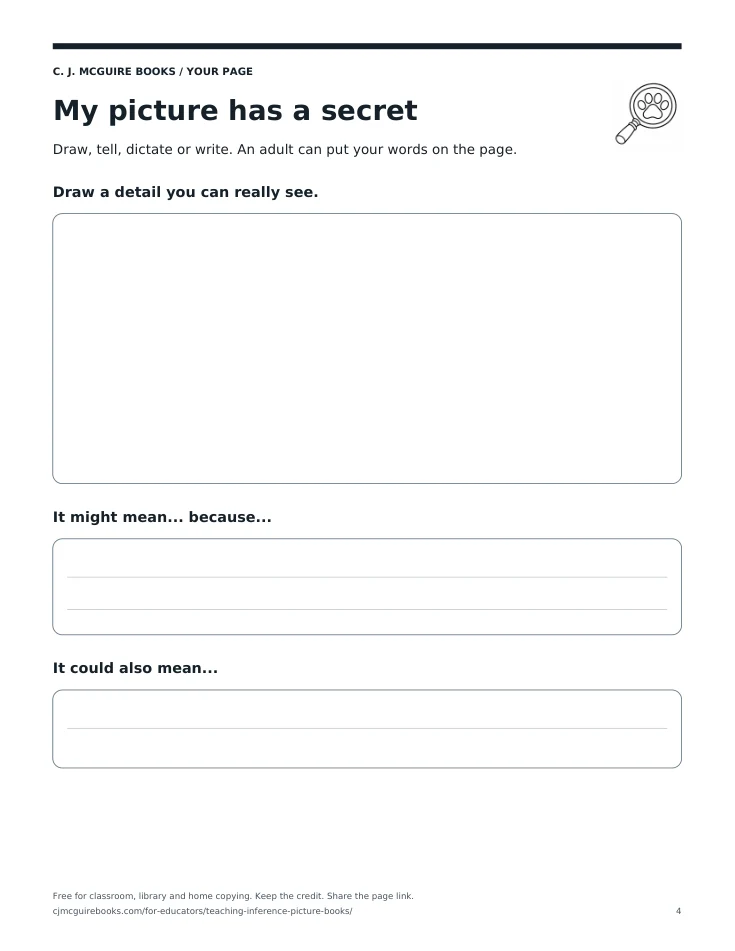
- One minute to look. Ask, “What can you actually point to?” Let children find details before explaining them.
- Two minutes to connect. Model “I notice ___. I know ___. So I think ___.” Partners offer a possibility. Ask which detail helped.
- One minute for another idea. “Could that same clue mean something else?” Enjoy the disagreement without voting for a winner.
- One minute to check. Read the text. Does it support an idea, rule one out, or leave us wondering?
If the room goes quiet
Offer two possibilities aloud and let children point. A child might see something clearly without yet having the words to explain it. Give the vocabulary, then return the decision to them.
The learning is in the connection between detail and explanation. “It’s Tuesday” is a magnificent guess, but an umbrella alone cannot prove it.
One well-explained idea is enough for today. You made room for thinking, and you did it with a page you already had.
A few useful details
Copy these original resources freely for noncommercial classroom, library and home use, including a closed class learning platform. Keep the credit and website link. To share publicly, link to the resource page. You do not need a C. J. McGuire book to use these activities.
How these resources were made
Creative direction is by C. J. McGuire. The resources were developed with AI assistance and are offered for educator review. They have not been independently evaluated or mapped to curriculum standards. The teaching notes describe intended practice, not promised outcomes.
The reading activities draw on principles such as modeling comprehension strategies and purposeful discussion. The IES guide to K–3 reading comprehension explains the evidence and its different strengths. It does not evaluate these resources.
Tell C. J. what worked, what needed help, or ask about a school or library reading → General observations are enough; please do not send children’s names, photographs or identifiable work.